2026-09-23 · Wesley Coburn
Why Texas Tree Roots and Clay Soil Damage Sewer Lines
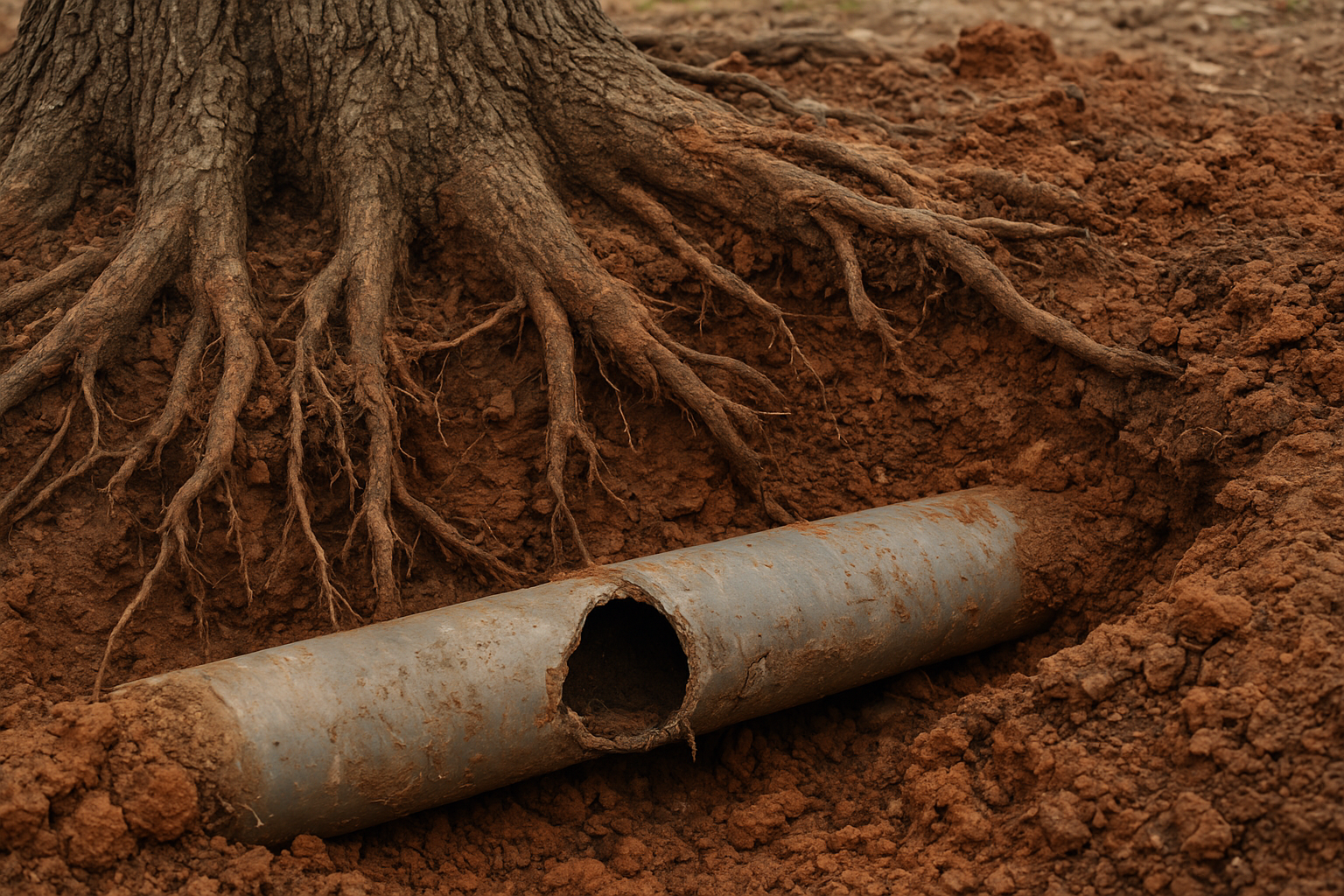
In Houston, tree roots and clay soil damage sewer lines because expansive clay in Harris County shifts with every wet-dry cycle, stressing pipe joints until they crack, while roots from mature trees in neighborhoods like Montrose and the Heights actively seek the constant moisture inside those lines and force entry through even small gaps.
Clay Soil Movement in Harris County
Harris County soils contain high percentages of clay that expand when wet and contract during dry spells. This movement exerts lateral pressure on buried sewer pipes, particularly older clay or cast-iron lines common in homes built before 1970 in the Heights and Midtown. Over repeated subtropical rain events, the shifting ground separates joints and creates hairline fractures. Flat terrain across Downtown and River Oaks slows drainage, keeping clay saturated longer and extending the stress period. Nearby cities like Katy and Sugar Land share similar soil profiles, so the same pipe strain appears there too. Homeowners notice recurring backups after heavy summer storms because the ground has already loosened connections underground.
Tree Root Growth Patterns Around Houston
Live oaks, pecans, and other common Houston trees send roots toward sewer lines because the pipes leak small amounts of water and nutrients. In River Oaks and Montrose, large canopy trees planted decades ago now have root systems that reach 20–30 feet horizontally. Roots enter through separated joints created by clay movement and then swell inside the pipe, restricting flow. The mild winters allow year-round root activity, unlike colder climates where growth pauses. Properties near the Houston Zoo or Museum of Fine Arts often sit on lots with mature landscaping that accelerates this process. Once roots establish inside the line, they trap debris and create complete blockages within one or two growing seasons.
Subtropical Climate Effects on Pipe Integrity
Houston's hot, humid summers followed by occasional winter freezes accelerate damage in two ways. High summer evaporation dries surface soil while deeper clay retains moisture, creating differential movement that torques pipes. When rare freezes hit, the ground contracts further and can snap already stressed sections. Frequent afternoon thunderstorms deliver sudden water loads that saturate clay quickly, restarting the expansion cycle. In Pearland and Sugar Land, these patterns repeat with the same result: older lines in established neighborhoods fail faster than newer PVC installations. The constant humidity also promotes root growth because trees never experience true dormancy.
Practical Steps for Houston Homeowners
Schedule a sewer camera inspection to locate exact entry points before roots fully obstruct the line. Early detection in areas like the Heights often allows targeted root intrusion removal rather than full replacement. Track seasonal patterns—most backups occur after prolonged summer rains when clay is fully expanded. Keep detailed records of any slow drains or gurgling toilets, which match the signs outlined in Signs of a Sewer Line Problem in Your Texas Home. Compare options for repair methods using guidance from How Much Does Sewer Line Repair Cost in Texas? before deciding on excavation versus trenchless approaches suited to local soil conditions.